When you book a consultation with a cosmetic surgeon in Mumbai, the conversation rarely starts with anaesthesia. You’re probably thinking about results: a sharper jawline, a flatter abdomen, or a nose that finally matches the face you see in your head. But anaesthesia is the invisible backbone of every procedure — and a mismatch between the type chosen and your specific clinical profile is one of the most underappreciated sources of surgical risk.
This article walks you through how surgeons actually make this decision, what general and local anaesthesia each involve on a practical level, and what can go wrong when the choice is rushed or poorly considered.
How Surgeons Weigh General Against Local Anaesthesia
There is no universal rule. The decision is a matrix of factors that a skilled surgeon and an experienced anaesthesiologist work through together before you ever step into an operating theatre.
Procedure scope and duration are the first filters. A rhinoplasty lasting three hours, or a full abdominoplasty with muscle repair, demands the controlled, sustained stillness that only general anaesthesia reliably delivers. A minor blepharoplasty, a small lipoma removal, or a single-area fat-transfer harvest can often be completed safely under local anaesthesia with or without light sedation.
Patient anxiety and tolerance carry more clinical weight than many people expect. A patient who cannot remain still — whether from anxiety, claustrophobia, or an involuntary response to sensation — creates procedural risk even during technically straightforward operations. In those cases, general anaesthesia may be safer despite a smaller surgical footprint.
Systemic health shifts the equation the other way. Patients with cardiovascular disease, obstructive sleep apnoea, or a history of adverse reactions to anaesthetic agents may face higher risk under general anaesthesia. The American Society of Anesthesiologists publishes widely referenced physical status classifications that surgeons use to benchmark this risk — most reputable Mumbai clinics apply an equivalent pre-operative screening process.
Anatomical location also matters. Local anaesthetic agents work by blocking sodium channels in peripheral nerves, which means they are highly effective for superficial or regionally isolated work. The face, hands, and parts of the torso respond well. Deep-plane procedures or anything involving the trunk musculature typically require general anaesthesia to achieve the muscle relaxation surgeons need.
Drug volume limits are a safety ceiling that is sometimes overlooked in private clinical settings. Lidocaine, the most common local agent, has a maximum safe dose relative to body weight — typically 4–7 mg/kg depending on whether it is combined with adrenaline. Exceed that ceiling, and you risk systemic toxicity: arrhythmias, seizures, cardiovascular collapse. A surgeon performing tumescent liposuction across multiple large areas must calculate this carefully.
What Each Type Involves on the Day — and Why Getting It Wrong Raises Risk
General Anaesthesia
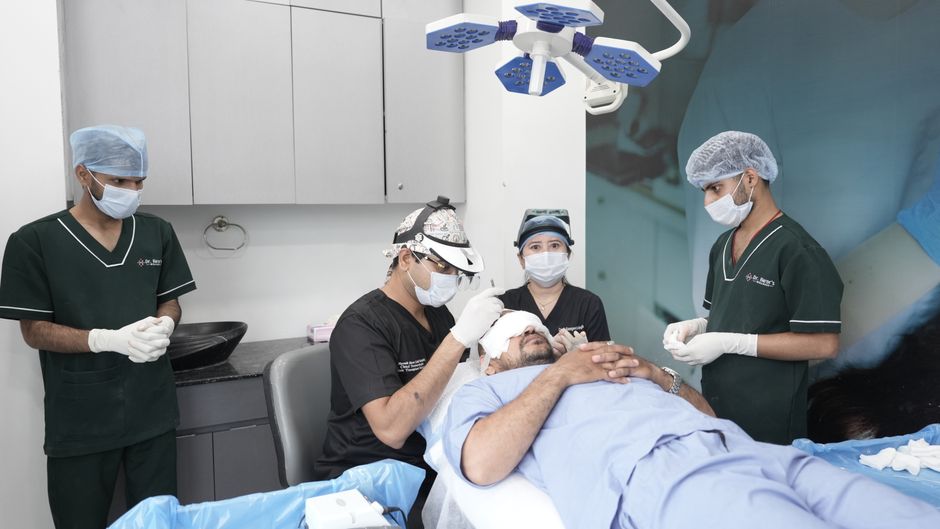
General anaesthesia renders you fully unconscious through a combination of inhaled gases and intravenous agents. You will not feel, hear, or remember the procedure. A dedicated anaesthesiologist monitors your airway, breathing, blood pressure, and oxygen saturation continuously throughout.
The recovery arc is longer. Post-operative nausea, grogginess, and a sore throat from the airway tube are common in the first several hours. More seriously, general anaesthesia carries a small but real risk of aspiration, malignant hyperthermia (a rare genetic reaction to certain anaesthetic gases), and post-operative cognitive effects — particularly in older patients. These risks are manageable in a properly equipped facility with a trained anaesthesiologist present, but they become dangerous in under-resourced settings.
This is a critical distinction in Mumbai’s cosmetic surgery landscape. Some lower-cost clinics offer general anaesthesia without a dedicated anaesthesiologist on-site, relying instead on the surgeon to manage both roles. That is a serious red flag. Always confirm that an independent, qualified anaesthesiologist will be present.
Local Anaesthesia (With or Without Sedation)
Local anaesthesia numbs a defined area while you remain conscious. When combined with intravenous sedation — sometimes called monitored anaesthesia care or twilight sedation — you are deeply relaxed and may drift in and out of light sleep, but you are breathing independently and can respond to verbal cues.
The advantages are meaningful: faster recovery, lower cardiovascular stress, reduced nausea, and the ability to perform the procedure in an accredited clinic rather than a full surgical theatre. Many facial procedures, including certain facelifts and eyelid corrections, are now routinely performed this way by experienced surgeons.
The risks, however, are different rather than absent. Incomplete anaesthesia — where the block does not fully cover the operative field — can cause patient movement at a critical moment. Allergic reactions to local agents, though rare, do occur. And sedation, if not carefully titrated by a trained provider, can tip into respiratory depression.
A qualified cosmetic surgeon in Mumbai will discuss both options transparently, explain the rationale for their recommendation in the context of your specific procedure and health history, and have written protocols for managing complications of either type. If the conversation feels rushed or the answer is simply “we always do general” without any individualisation, that is worth noting.
The bottom line is that neither option is categorically safer. Safety comes from matching the right approach to the right patient in the right facility — with the right team.
Frequently Asked Questions
Can I request general anaesthesia even if local is recommended?
Yes, you can express a preference, but your surgeon and anaesthesiologist should explain whether it is clinically appropriate for your case. Patient comfort matters, but overriding a sound clinical recommendation for non-medical reasons can introduce unnecessary risk.
How long before surgery should I stop eating and drinking?
For general anaesthesia, standard guidance is nothing by mouth for at least six hours before the procedure (sometimes eight for solids). For local anaesthesia with only topical or minimal sedation, restrictions may be lighter — your surgeon’s team will provide specific instructions based on your planned anaesthetic plan.
What qualifications should the anaesthesiologist have?
In India, look for an MD or DA (Diplomate in Anaesthesia) from a recognised medical institution, with active registration under the Medical Council of India or its state equivalent. Experience in cosmetic or day-surgery settings is an additional marker of suitability.
Is tumescent liposuction under local anaesthesia safe for large volumes?
Tumescent liposuction can be performed safely under local anaesthesia for moderate volumes, but larger sessions carry a real risk of lidocaine toxicity if dosing is not carefully managed. High-volume liposuction is generally safer under general anaesthesia in an accredited facility.
Why do some clinics charge significantly less for the same procedure?
Cost differences often reflect anaesthesia choices, facility accreditation, and staffing. A clinic cutting costs by using sedation without a dedicated anaesthesiologist, or by operating outside an accredited theatre, is transferring risk to you — not offering equivalent care at a better price.
How do I know if a clinic is properly equipped for anaesthesia emergencies?
Ask directly whether the facility has a working anaesthesia machine, reversal agents (such as flumazenil for sedation and lipid emulsion for local anaesthetic toxicity), a crash cart, and a protocol for transferring patients to a hospital if needed. A credible clinic will answer these questions without hesitation.